You spent decades building an immaculate corporate reputation. Then, a single lawsuit, a misunderstood product launch, or a rogue executive generates a cycle of negative press. Suddenly, your Wikipedia page features a glaring "Controversy" section. It sits there, dominating your search results and eroding the trust of investors and clients.
Your first instinct is to demand its immediate deletion. But Wikipedia does not bend to corporate pressure. Trying to erase history only triggers a platform-wide backlash. To repair your digital footprint, you have to master the exact editorial standards the community uses to govern itself.
Mastering the NPOV Standard
You cannot fight negative information with marketing copy. Wikipedia operates on a strict neutral point of view (NPOV) policy. This policy states that the platform's mission is best served not by advancing or detracting from particular points of view, but by trying to present a fair, neutral description of the facts including that various interpretations and points of view exist.

Cleaning up a controversy section requires surgical precision, not brute-force deletion.
1. Shift from "What Is" to "What Is Believed"
When handling a controversy, the most effective strategy is to reframe the narrative. An encyclopedic article should not argue that a corporation is criminal, even if the author believes it to be so. It should instead present the fact that some people believe it, and what their reasons are, and then present what the other side says.
"Perhaps the easiest way to make your writing more encyclopedic is to write about what people believe, rather than what is so. What people believe is a matter of objective fact, and we can present that quite easily from the neutral point of view."
2. Strip the Emotion from the Text
A controversy section often inflates because amateur editors use loaded language. A neutral point of view attempts to present ideas and facts in such a fashion that both supporters and opponents can agree. You can systematically remove adjectives, bias, and speculative language:
- Before, "The company suffered a disastrous and humiliating lawsuit"
- After, "The company was involved in a lawsuit, which was settled out of court in 2024"
- Before, "The CEO was forced out in a shocking boardroom coup"
- After, "The CEO departed the company following a board decision in Q3 2025"
3. Balance the Weight of the Claims
If the negative event was a minor blip in a 20-year history, it should not occupy fifty percent of the article. You can request editors to condense the section or merge it into the broader company history timeline. The goal is proportionality, ensuring each topic receives weight appropriate to its significance.
The Danger of the Quick Fix
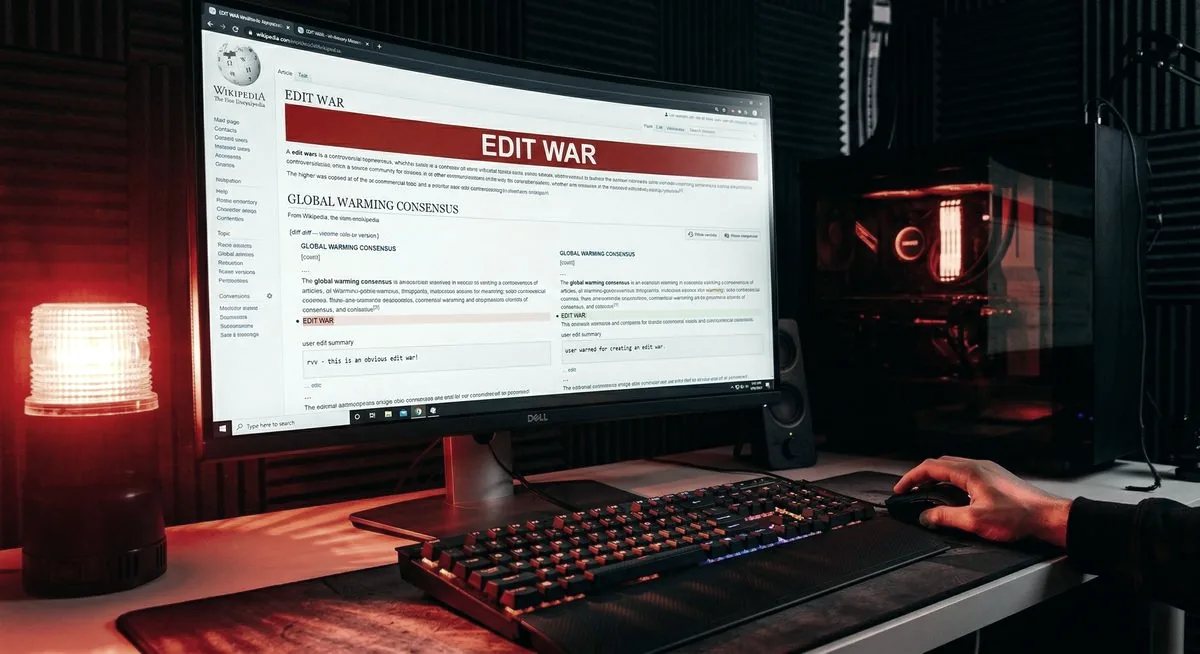
You cannot just log in and delete a controversy section. If you do, the community will instantly revert your changes. This leads to an edit war, in which two or more parties dig in and refuse to compromise.

Corporate teams attempting to directly edit Wikipedia pages risk triggering conflict of interest violations.
Because 100% agreement is rarely possible, the risks of direct intervention are severe:
- Your corporate IP address will be flagged for a conflict of interest
- Your changes will be immediately reverted by watchful editors
- A public warning banner may be placed on your article
- The controversy section may actually grow as editors react to your interference
The Right Approach to Reputation Repair
Writing in NPOV style requires recognizing that even widely held or widely respected points of view are not necessarily all-encompassing. You need a third-party expert who understands how to negotiate with the editor community, present objective facts, and ensure the article meets the baseline requirement: writing that is agreeable to essentially rational people who may differ on particular points.
At Auto Draft, we specialize in Wikipedia reputation management, helping clients clean up controversy sections while maintaining full compliance with community standards.
Do not let a single negative news cycle dictate your permanent digital legacy. Request a free notability assessment today to start building a balanced, bulletproof Wikipedia page.